Wednesday, February 27, 2013

Autumn Impressions: SJG photo-workshop exhibition in TCR

by Ray Pfortner and aleks

'Autumn Revealed', by Briand Sanderson

A juried show of 13 photographers' views of the Seattle Japanese Garden 
Captured in the Garden’s 2nd Photography Workshop, October 2012

Instructor:  Ray Pfortner | RayPfortner.com

You are invited to meet the photographers and their instructor:  come to the opening of Autumn ImpressionsTateuchi Community Room in SJG Sunday, March 10, 1-3pm. There is no admission charge; food and beverages courtesy of Seattle Japanese Garden Advisory Council.


'Fall is awesome' by Eric Guevremont


People’s Choice Award

Vote for your favorite piece using the ballots provided. Simply note the title and/or the number appearing in parentheses after the title on your ballot. 

If you are interested in receiving more information on photo activities at the Garden, including the next Photo Workshop in April and May (info below in the post), please print your email on the ballot in the space provided.


• All photographs taken in the 2nd photo workshop at the Garden, Oct. 2012
•  13 photographers, shooting from pre-dawn to dusk
•  over 30,000 photographs taken
•  128 photographs submitted to the jury
•  8 jurors
•  26 photographs selected for the final show
•  all the prints are available for sale, framed & unframed
•  30% of all sales will be donated to the Garden

'Middle Earth' by Sally J. Filiault
All of the prints are for sale – framed & unframed.  To inquire, contact the individual artist via email.  (Prices & email addresses are on the wall tag under each photograph; artist emails are also on the take away sheet on the counter.)

Photographers: Vicki Allison, John Anderson, Jason Carnevale, Sally J. Filiault, Eric Guevremont, Jolie L. Hellings, Lisa Marie Kostal, Marcia M. Mueller, Lynn Pruzan, Sue Russell, Briand Sanderson, Aurora Santiago, Silvia R. Wilson.

Jurors: Cheryl Brown, Mary Ann Cahill, Joan Laage, Aleksandra Monk, Mary Nagan, Lucinda O’Halloran, Nat Suyenaga, Rona Visser.


'Harbor Turtle' by Lynn Pruzan
Tip:  the Garden opens to public THIS Friday, March 1st, and a special FIRST VIEWING ceremony is on SUNDAY, March  3rd -  but the photos are already mounted in TCR  - you can view them and vote before and after official day of exhibition, March 10th. The flickr workshop page contains all the submitted photographs (not all of them made to TCR - judge the jurors and see if they missed some great pics)  and is here: FlickrFall2012

! Spring Photo Workshop at the Garden - April 26/27 and May 10/11 - with a show in the fall.  Registration starts March 12 at cheryl.brown@seattle.gov.  You can follow's Ray's calendar page for this and other of his workshops.


'The Garden Wall' by John Anderson

Tuesday, February 19, 2013

Winter Garden

Seattle Arboretum, Winter Garden - Witch Hazel • 2/25/13
by rpacht
The Witch Hazels are in full regalia at the arboretum winter garden area.  The fragrance is intoxicating, just sayin:)

The winter garden is right near the Graham Center, go out the back up the hill and turn left (South)

Seattle Arboretum, Winter Garden -
Prunus subhirtella 'Rosea' • 2/25/13
Seattle Arboretum, Winter Garden
Rhodondron 'Seta' • 2/25/13

Saturday, February 9, 2013

Legends, Tales, Poetry: Visual Narrative in Japanese Art

by Keiko P.
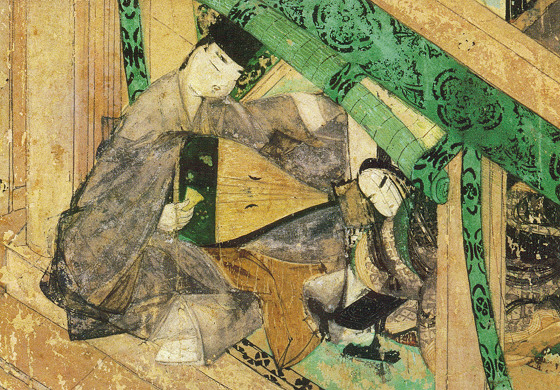
Here is a great opportunity for us to enjoy or even to be enlightened by various forms of Japanese Art. I was delighted to see that the exhibit includes the Tale of Genji, our esteemed and past guide, Dr. Hiraoka, used to talk about by the wisteria trellis in SJG in his tours(The image is from the 12th century Genji Monogatari Emaki scroll not related to this exhibit.)


Below is information from Seattle Art Museum Exhibition page. Please see the link for the ticket information. 

http://www.seattleartmuseum.org/exhibit/exhibitDetail.asp?eventID=25557

SAM’s renowned Japanese art collection visually enacts stories told and retold over thousands of years. As the works themselves lend new interpretations to familiar stories, so does each installation. The works selected for this exhibition—scrolls, screens, prints, photographs, lacquer work, ceramics, and textiles—are telling examples of the rich visual portrayals in Japanese art from the 13th to the 21st century.

A vast literature of Buddhism, Shinto, and Daoism recounts the miraculous origins of temples and shrines; legendary episodes of Buddhist monks, Shinto deities, Daoist immortals; and the sacred land in which the gods reside. All of these fascinating literary narratives captured the imaginations of Japanese artists, and engendered pictorial works that were appreciated for their visual appeal and didactic value. Classical court literature, in particular theTale of Genji, a court romance that is arguably the earliest novel in the world, has had a profound impact on Japanese visual culture for more than 1000 years. Likewise, poetry is an indispensable inspiration for pictorial art in Japan.

–Xiaojin Wu, Associate Curator for Japanese and Korean Art

* * * * *


The Tale of Genji here;  (http://ota.ahds.ac.uk/headers/2245.xml) 
-- Oxford Text Archive A complete English translation of the work, free for non-commercial use.

Sunday, January 27, 2013

Shinto New Year

text, captions and fotos by Nat  S.

HATSUMODE:  FIRST SHRINE VISIT OF THE NEW YEAR,
TSUBAKI GRAND SHRINE OF AMERICA, GRANITE FALLS, WA

Senior Priest, Rev. Lawrence Koichi Barrish performed Oharae at midnight on December 31, and multiple times during the following days of January 1 and 2, 2013. In this period, over 1000 people visited the shrine.

View of Mt. Pilchuck on the way to Tsubaki Shrine.
Several peaks in the Cascade Range are visible during the drive.


The main torii, 23’ high and hewn of logs from Port Orford cedar, stands near
Crooked Mile Road.  A torii is a gateway to the sacred space of Shinto shrines.  
(This view looks back towards the road from the pathway to the shrine.)

A fire is maintained as a spot for visitors to warm up while walking shrine grounds,
or while outside registering and waiting to attend one of the scheduled Oharae
(purification ceremony for renewal of life energy and our connection with nature). 


Visitors pause at a temizuya to scoop fresh water for rinsing
their hands and mouth before entering the shrine for Oharae.


At the top part of this photograph are shimenawa (rope made from
twists of rice straw) and shide  (zigzag strips of white paper), hanging
actually from a torii in front of the shrine.   These indicate a purified
space.  Visitors walk up the stone steps to enter the shrine for Oharae.

A rope, vertically suspended between the blue banner and offertory box,
may be swung by visitors to sound a bell. Ringing the bell is part of a
sequence which includes bowing and handclapping done in prayer to Okami.    

Tsubaki Shrine is on the stony banks of the Pilchuk River.  Here Jack
Frost has edged fallen leaves, like this Big Leaf Maple, with delicate ice crystals.


Sacred spirit of an old tree near the Pilchuck River
is signified by encircling the trunk with shimenawa and shide.

To plan your own visit, check www.tsubakishrine.org  for information on activities and events.

Monday, January 21, 2013

A Visit to Longwood Gardens

by Lynnda
West Conservatory Complex, Longwood Gardens website
This fall, while on a trip to reacquaint with long-lost friends, I had the opportunity to visit a section of Longwood Gardens in Kennett Square, PA, in the outskirts of Philadelphia. 
The garden was originally begun in the early 1700s by a Quaker family who purchased the land from William Penn.  In 1906, the farm was purchased by Pierre du Pont to preserve the arboretum begun by Joshua and Samuel Peirce over 100 years earlier.  Read more about this incredible park here:   The Story of Longwood Gardens

The gardens are immense, and since I had limited time to visit, I chose to focus on the Outdoor Waterlily Display.  Currently there are 5 shallow pools that grow water lilies from around the world.  The lotus plant really interested me, there are none in the Seattle Japanese Garden, but so many of the stone lanterns have a lotus blossom on the top.  I was intrigued to see a real lotus plant.  Although it wasn't blooming during my visit, several of the seed pods were visible.  I had seen them in floral arrangements and didn't know what they were. They are the brown pods sticking above the blue-green leaves in the photo below.  The plant lives in murky pond water, but the flower is pure and beautiful.
Longwood Gardens Lotus plant with seed pods  LLaurie 9/12


The lotus flower can range in color from pure white to lavender, pale blue or pink  In the picture below, you can see the seed pod as part of the blossom. From religionfacts.com, "The roots of a lotus are in the mud, the stem grows up through the water, and the heavily scented flower lies pristinely above the water, basking in the sunlight. This pattern of growth signifies the progress of the soul from the primeval mud of materialism, through the waters of experience, and into the bright sunshine of enlightenment."

Lotus Flower Meaning
Lotus blossom  by  matze_ott

The giant water-platters, pictured below, were first hybridized at Longwood Gardens.  The winter weather in Philadelphia  is too harsh for the plants to survive, so in February each year, new plants are started from seeds collected the previous summer.  By mid summer, they have grown to over 6 feet wide and can hold up to 100 pounds if the weight is evenly distributed on the platter.  They are incredible to see and remind me of many children's storybook illustrations about frogs and pond life.  I would love to have seen a small child lounging on one of the platters!

Water-platters, L. Laurie 9/12

Water Lilies, L. Laurie, 9/12
Water-Platter Close-up, L. Laurie, 9/12
The sign below explains the growth of the Water-Platter plants.  One plant will produce many leaves, and they grow to maximum size in 4 to 5 weeks. The flowers are spectacular, have a very short life and bloom at night.  The first night they are creamy white with a strong pineapple fragrance.  The flower is 10-12 inches across and resembles a large magnolia flower.  This is a female flower, and it closes up during the day.  The second night, it is a pinkish color and is now a male flower.  That's as long as the flower lives.  What a wonderful opportunity to have seen these magnificent plants in bloom!

Sign at Water Lily Park, L. Laurie. 9/12
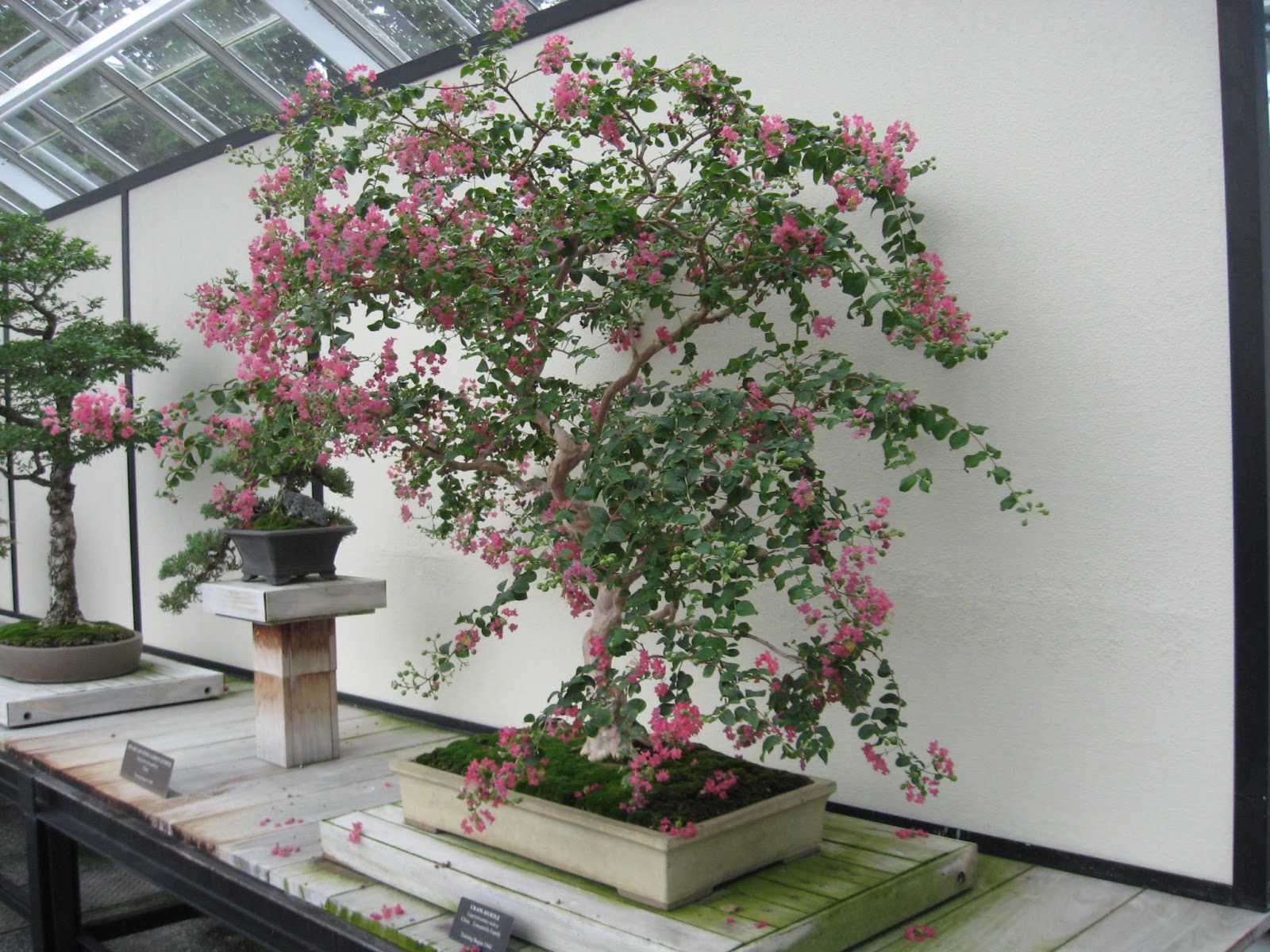
Walking to the Water Lily Display required walking through a Bonsai display.  The Crepe Mertle was in full bloom and was so beautiful.  I don't recall seeing these plants in the Pacific Northwest, but the countryside in Maryland had many in bloom, and they were a joy to see.

Crepe Mertle Bonsai, L. Lauire, 9/12
 When leaving Longwood Gardens, we walked through the Children's garden, and this dragon was guarding the entrance.  This park has something for everyone, and should you find yourself anywhere in the Philadelphia area, be sure to take the time to visit.  It will not disappoint.


Sunday, January 13, 2013

Winter pics of Seattle Japanese Garden

by aleks
Last Friday, sunny but really cold for Seattle standards, and the day before she flew back to her sub-tropical home in Australia, Marilyn and I decided to visit Seattle Japanese Garden, officially closed for winter, just to see how it looks like at this time of the year.  Patty the gardener kindly let us in through the back-gate and below is what we saw as we trekked around, carefully avoiding ice-covered bridges and stepping stones:  lot of frost and sleets of ice on the pond...

SJG • 1/11/13 - Magnificent trunk of our old acer palmatum dissectum,
seen from the connector path - note the frost on the mundo grass across the path:(


SJG • 1/11/13 - All white west side of the Garden,
where sun has trouble to reach over the nearby hill 

SJG • 1/11/13 - Ice on the pond

SJG • 1/11/13 - white and green suhama's  (beach) end

SJG • 1/11/13 - Weeping willow on the sunnier east side of the Garden


SJG • 1/11/13 - Aha!  That's how gardeners reach Turtle Island when you are not looking :)


SJG • 1/11/13 - Saucer Magnolia past the zigzag bridge on the W path has buds
and is ready for flowering soon, but I decided to capture its whole silhouette  instead
- Patty gave it this attractive pixie haircut last fall

Many camellias have buds, and will be flowering soon!  It's quite a sight to see them so defiant in this weather, especially knowing that soon they'll put up a magnificent show - last year i captured quite a few of them in the act: you can go to the Bloom Blog, click on listed camellias and start salivating....  Before we left we decided to check on the most lionhearted of the camellias, usually blooming before the gates of the Garden open- we were not disappointed to find many bright pink buds and a lonely brave flower already:

SJG • 1/11/13 - Camellia daikagura
(right past the fork on the main path, as it bends  onto E path)

Btw, Marilyn hopes to become a guide in the Garden, as she spends considerable amount of time in Seattle; we met last summer, at her previous visit to our town - she was just leaving the Garden and decided to stop by and join SJG guides' group gathered to watch 'Japan: Memoirs of a Secret Empire' - a part of the 2004 PBS documentary series in our last year's Japanese Films in Tateuchi Room pilot project.

__________________

Kobayashi Issa, 1818

.我門は無きずな旦も小霜哉
waga kado wa mukizuna asa mo ko shimo kana

at my gate
a flawless little patch...
morning frost

Translated by David Lanoue