by Forrest Campbell Another gem from our garden crew: our fellow-docent, Forrest Campbell, just penned an article for the Pacific Horticulture's winter 2014 issue about the Hulda Klager Lilac Garden and Lilacs (in Woodland Garden, WA, located off I-5 exit 21, 30 minutes north of Portland, Oregon or 2.5 hours south of Seattle, Washington). I can only copy up to 4 paragraphs, without being sued for copy-right issues, but you can go to the link on the end of my copy, and read the rest… Congrats Forrest on your authorship and beautiful photography! aleks
• • • •
Hulda Klager Lilac Garden
A Spring Showcase of Blossoms and History
By: Forrest Campbell
Our timing was perfect! Last year my wife, Rene, and I began our spring vacation in a garden filled with color, fragrance, and history. On previous trips through southern Washington we’d seen signs along I-5 for the Hulda Klager Lilac Garden in Woodland, Washington, but we were usually too early or too late to catch peak bloom. Not this time. Staying in nearby Vancouver, we spent two days taking in the wonderful lilacs and their stories.
Syringa x hyacinthiflora 'Sweetheart'. Photo 2013 by Forrest Campbell
Hulda Thiel (1864–1960) was born in Germany on May 10th and arrived in North America when she was two. The Thiel family pioneered in Wisconsin and Minnesota before settling in Lewis County, Washington, near the town of Woodland when Hulda was 13. In her early teens, Hulda married Frank Klager.
Mrs. Klager’s interest in horticulture began at home. She studied botany and read gardening books and catalogs. From New Creations in Plant Life by W.S. Harwood (Macmillan Co., 1905) she learned of the work and methods of Luther Burbank. Mrs. Klager began hybridizing lilacs in 1905, and in just five years created 14 new cultivars. The cornerstones of her crosses, her “Magic Three” according to lilac expert Father John Fiala, were Syringa vulgaris ‘Mme. Casimir Périer’, a fine double white bred by Lemoine in 1884, S. v. ‘President Grevy’, a double blue bred by Lemoine in 1886, and S. v. ‘Andenken an Ludwig Späth’, an excellent purple bred by Späth in 1883.
Hulda’s breeding objectives were to create vigorous, disease-resistant plants; extend the plant’s flower color range intoclear blue, pink, and rose; and to create variations in flower cluster forms and floret size. In his book Lilacs, A Gardener’s Encyclopedia, Fiala states that Hulda Klager introduced more than 100 cultivars. The “Lilac Lady of Woodland” died in 1960 at the age of 96.
For the rest of the article and more pics go here...
by aleks
I used to think that I do not like Japanese cuisine: several trips to Japanese restaurants left me thinking that a cup of nice miso soup and bowl of rice (I do not eat meat or fish) could hardly be called a meal. No veggies, which I covet so much. Weird pickles (and I generally looove pickles) - kind of ok, but eaten by itself? I couldn't get the concept. Raw fish sushi? Yuck. So I gave up.
Several times our Japanese born guides brought food to our different functions, which I thought was very nice, especially NAMASU (slightly pickled daikon radish and carrot salad) and Keiko's amazing AMAZAKE drink (an ancient Japanese fermented rice beverage), but all too mysterious for me to figure out…. Until.
Until an early spring 2 years ago, when our film non-commitee met at Shizue's house, that is. Shizue shared with us a simple lunch: shiitake mushroom udon noodle soup, fried tofu pockets filled with rice and Japanese salad plus tiny dish of pickles. Now, that THAT I definitely could eat! Lots of veggies - especially the udon noodle soup, laced with spinach, carrots, snow peas or whatever you have in the fridge. Shizue gave me her basic recipe (soak dried shiitake mushrooms, cook it, then augment the broth with soy sauce, mirin, and maybe a dash of toasted sesame oil).
I have been tinkering with it and mastering it ever since, adding ginger, garlic and making my own dashi (soup stock). So far so good - I have been making a lot of Japanese fat noodles udon soup, eating it, making it for friends, and recently 3 gallons for the Nickelsville village, too. Everybody loves it!
Somewhere along the way another Japanese-born guide, Hiroko, opened my eyes to a very good commercial soba soup base (no msg, which I'm unpleasantly sensitive to): she poured it over cold soba/buckwheat noodles, before adorning it with cilantro, green onions and wasabi paste for a terrific, refreshing cold pasta dish for the plant committee group meeting. I don't know its name, but made the dish several times since, adding green edamame (soy beans) and red pepper for color, took it to different outings and it was always a blast, going very fast.
Now I accumulated THREE Japanese dishes that I eat often: 1.) shiitake/veggie udon soup, 2.) cold soba noodles dish and 3.) daikon/carrot namasu salad… Make it FOUR dishes, with carrot/ginger/miso salad dressing, which I often eat straight out of the jar after making it. Ok, next I bought three Japanese cookbooks, started watching Japanese cooking videos, and hoped that maybe the mystery is over. Next yet, I discovered that the commercial soba soup base goes phenomenally well with my shiitake soup stock, and faster than messing with mirin and soy sauce: just combine mushroom stock with the soba base: voila.
Except that I eat udon soup very, very often. Like 3 times a week often. The commercial soba soup base contains bonito flakes (dried tuna), which gives the soup a deep, exciting oomph (without the fish taste or odor), but I knew I want to think of alternative vegan soup base, before I break out with another unpleasant food sensitivity - I do not think I was meant to eat bonito flakes so often, after never having them before (my msg intolerance came on suddenly, after some years of digesting it with no problem), plus I generally prefer mostly a plant-based food. So I read more about udon stock, and enter shiitake/kombu soak water for a really good, vegan dashi. Now I remembered that Shizue did mention kombu (edible sea weed), of course, except that I had no clue what it was then.
So far so good, except for mirin - Japanese cooking wine. I read a lot about mirin, trying to make sure that I'm using the right stuff: the content should be just cooking wine. What do you mean American laws do not allow to sell real mirin here, because of some alcohol tax laws? What? Like adding salt or sugar will change the tax ideas and allow it to sell as 'condiment' and not 'alcohol'?
By the time you face the law, mirin in USA is some sugared water (or worse, GM corn-sirruped water). It's not really fermented, so it is dead. I looked in my cupboard: yup! No real mirin there, just sugar and corn-sirruped junk. Two different bottles, one even contained NO fermented alcohol, just corn sirup, vinegar, salt and some chemicals 'as preservatives'. Fermentation process IS preservation, but there was nothing fermented in my bottles - no wonder that the commercial soup base tasted better that my home attempts: it probably contains real mirin. I ended up pouring the fake mirin down the drain and ordering a real mirin from across the country, from NC company that imports from Japan.
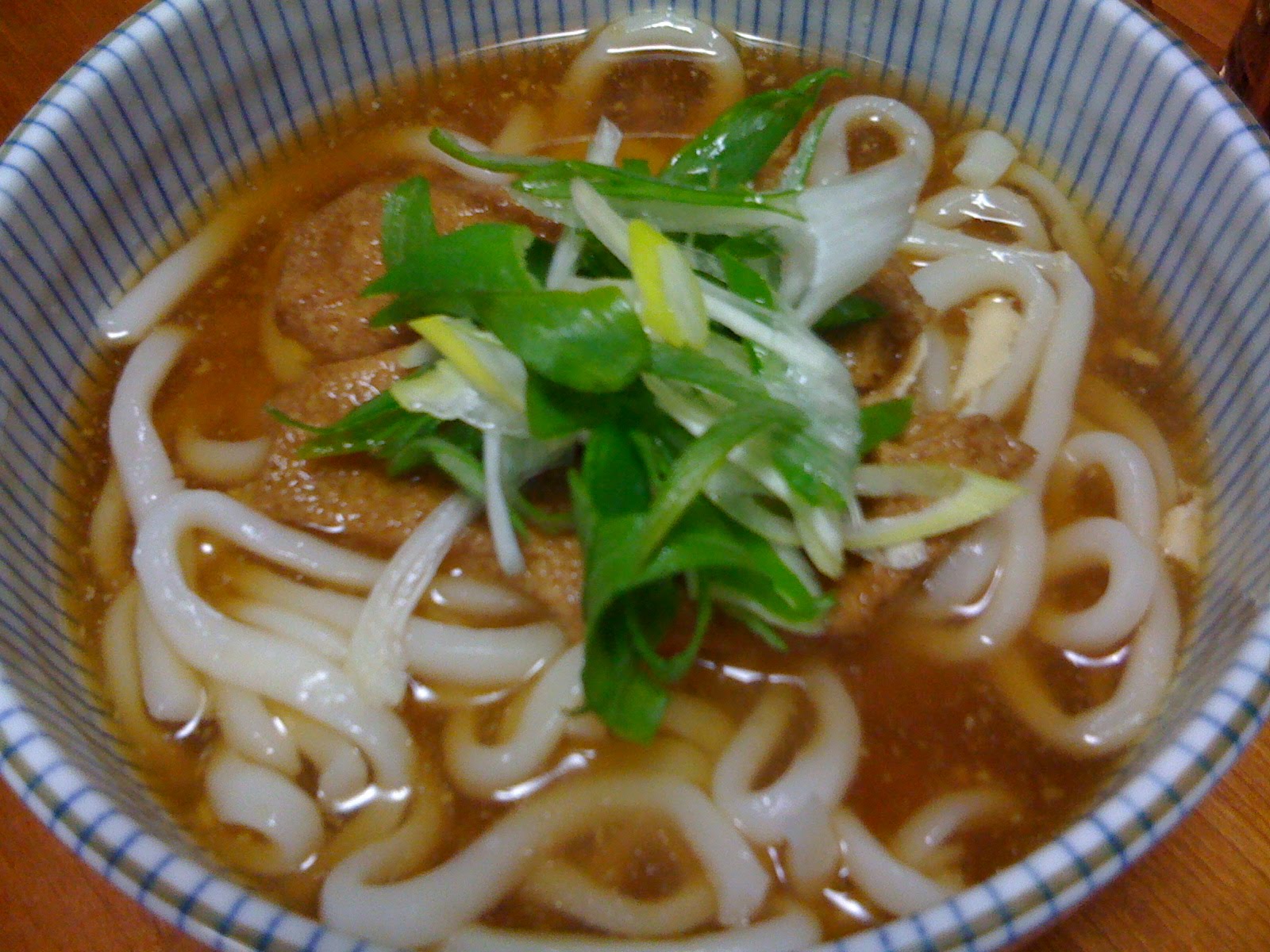
I ate all of my udon soup, or gave it away before thinking of getting a pic of it. Which is why you have some generic internet pic of udon soup above.
The video below shows how to make kombu dashi; I also soak shiitake and maitake mushrooms with kombu overnight - the mushrooms give the dashi a wonderful depth ('umami' = a savory taste). After soaking, cook it on low for an hour or more (take the kombu out before the water comes to boil), and continue cooking shiitake mushrooms for another 20 minutes or so, until they are really soft. I used to throw away shiitake at this point, because I didn't like their chewy texture, but nowadays I cut them into small pieces, throwing away just the center, where the tough steam is, and put the pieces back into the soup, with mirin/soy sauce mixture + noodles and veggies.
The kombu/mushroom dashi stock is also great in miso soup. Making dashi has a very mediative effect on me, and I developed a routine: soak before going to bed, cook in the morning, strain through paper towel, use for dinner later. Happy winter cooking Japanese soups! BTW, udon and miso soups are also very healthy for you - it's a LIVE, fermented food with many nutrients. But I'd it eat even if it wasn't…
If you don't have time to soak/cook your own dashi, just dilute commercial soba soup base (about 1part soup base : 2 part water; there are NO directions on the bottle, just my experience; use straight concentrated stock out of the bottle for cold noodle dish), heat it up, add veggies and noodles, and garnish with cilantro and scallions. Mniam mniam (Polish for yum, yum, yum!).
Yay, Keiko found an episode of 'cooking with dog' for Nabeyaki Udon; I just brought it up here from the comments section, so everyone can click! Thanks Keiko! Powdered dashi! http://www.youtube.com/watch?v=kWLNZzuo3do
The Bloedel Reserve is just a short ferry away from downtown Seattle (crossing time 35 minutes), and then less than 7 miles drive on the main road (WA-305 N) until you turn right onto Agatewood Rd NE, and find the destination on the end of that road (0.5 miles or so). Nowadays you can also take the bus (The #90 bus stops one mile from Bloedel Reserve (Kitsap Transit schedules here)…
1/3/14 - Bloedel Reserve: entrance to the Japanese part of the Garden
On weekends The Frog Hopper Bus Service, run by the Bainbridge Island Chamber of Commerce provides foot passengers on the Washington State Ferries with a chance to visit attractions around the entire island for a standard fare of $7 (there are also discounts and group rates). The all-day pass is good for hopping on and off one or both loop routes.
1/3/14 - Bloedel Reserve: cottage and the zen garden (previously family pool)
Anyway, when our Seattle Japanese Garden is closed for the winter it is good to visit Bloedel Reserve, to see the winter views in the Japanese part of the Reserve. On my last visit there, which was this previous weekend, I found an amazing, hand made holiday villages of doll and tree houses in the main manor house, complete with the whimsical trains of the past. Tony took the pics of the intricate details of the doll houses, but I did not - perhaps I can convince him to share the pics soon. I only took the photographs of the Japanese part, which I'm sharing here…
Description from of the Japanese Garden from the Bloedel Reserve website: 'JAPANESE GARDEN
Designed by Seattle landscape designer and nurseryman Fujitaro Kubota, the elegant landscape of the Japanese Garden offers subtly shifting views along its meandering stroll paths. The coniferous trees surrounding the garden provide a dark backdrop for the bold colors of Japanese maples and meticulously-pruned pines and flowering trees. The elements of stone and sand evoke meditative moods in the Dry Garden, designed by Koichi Kawana, professor of landscape architecture at the University of California.
1/3/14 - Bloedel Reserve:the pond behind the cottage
“We have been influenced by the Oriental attitude toward nature and the expression of it in Japanese and Chinese gardens. They have mastered the art of creating compositions using plants, earth and water, which induce visual and aesthetic emotions.” - Prentice Bloedel
• On edit: and here are the doll houses (if you double click on them you will see larger version):
1/3/14 - Bloedel Reserve: the doll house detail. Pic by Tony
1/3/14 - Bloedel Reserve: the doll house detail. Pic by Tony
1/3/14 - Bloedel Reserve: the doll house detail. Pic by Tony
by aleks
Great, some of my favorite Japanese foods, Kakiage Soba Noodles (Vegetable Tempura Soba) and Kohaku Namasu (Vegetables Marinated in Rice Vinegar) are traditional for the celebration of the New Year's Eve.
Found the recipes on the internet, along with this self-description of the place I found them at: 'Cooking with Dog is a YouTube cooking show featured by a canine host Francis and a mysterious Japanese Chef whose real name is not disclosed. While Chef cooks a variety of popular dishes in Japan, Francis calmly sits next to her and narrates the recipes step-by-step in English. He sometimes gets sleepy and closes his eyes but don't worry, you will still hear his voice. […]'
Here, from 'Cooking with Dog', is how to make Kakiage Soba:
And here Kohaku Namasu (Vegetables Marinated in Rice Vinegar) :
If you go straight to youtube version, you will find recipes written under the videos:
SJG is closed for the season, so some news from our feathered friends outside of my window. Pacific Northwest has Anna's hummingbirds which do not migrate out but stay trough the winter, and there was one, gray and green, on a below-zero Saturday morning. I spotted it on hummingbird feeder, but when looked closer noticed that it behaved rather strangely: instead of sipping and flying out, it looked as if it was drilling or mining: wrrr, wrrr.. Of course, the sugared water was frozen, and the poor bird tried to somehow get it out. I quickly brought the feeder indoor, thawed the content and took it out again, only to repeat it a few more times during the day.
Searched the internet for 'heated hummingbird feeder' with zero results, but found some advice there: one was to bring the feeder indoor at night at put it back in the morning; good for the early risers, those who don't travel or oversleep, and not a lasting solution, as it freezes right back fast. Plumber's heating tape advice looked rather cumbersome and expensive in executing, but advice about putting a 150 watts clip-on outdoor flash-lamp some 4-6 inches from the feeder looked promising.
Further research revealed that the lamp would need to be fitted with a pyrex glass bulb, + I would probably have to buy a short extension cord, as the lamp comes with an 8 feet cord only, so also some sort of insulation where the cords meet would be required. All of this was still agreeable until I realized that the 150 watts flood-lamp would not only illuminate the hummers' feeder but ALSO our neighbors' deck and bedroom window. Scratch that idea.
12/8/13 - NOT SJG. Hummingbird feeder 'heater' ingredients:
washcloth, 4 paperclips and 'hand warmers' packet
On the end I did bring the feeder inside for the night, but when I put it out the next morning it was in improved state: a washcloth, 4 paperclips and a hand warmer (the packets you get in a drugstore to put in your gloves or shoes when it's freezing outside) solved the problem. I folded the washcloth several times to fit it under the bottom of the feeder, sawed-in a paperclip in each corner (to be used as hooks on the feeder) and slipped a hand warmer packet between the layers closest to the feeder (with 4-5 layers insulating it from the air outside).
I had a customer in less than 2 minutes, and several of them returning often throughout the day! Literally every time I looked they were happy hummers there (they live in the neighbors' camellia tree), and although the 'heater' felt barely warm to touch, it kept the water in liquid state….
12/8/13 - NOT SJG; Steller's jays got fed, too (peanuts)
I wonder how the birds in the Japanese Garden fare now; the humingbirds live there, too - last time they had a nest on the pine tree right by the moon viewing platform - we didn't tell visitors, because of the birds' 1st and 4th amendments' issues, although we spied on them some, and then told the allies about their activities…
12/8/13 - NOT SJG; crows' bread diner - I LIKE crows very much
Ah, to further justify why this post is on the Japanese Garden Community blog, how about a link to a yummy Japanese Restaurant Style Carrot Ginger Salad Dressing - I came across it by accident, but after making it found eating it with a salad and alone, as a condiment and snack. It is THAT good! (Halving the recipe will give you a small, full jar - think 2 smashed carrots, 1 inch+ of ginger root, tablespoon of miso and a small amount of vinegar and oils)...
12/8/13 - NOT SJG; the usual little suspects munching on their seed mixture
Edit 11/11/13: SJG FILM BANK - For the last 2 years SJG film non-committee have been meeting and discussing films to be screened in TCR; last year we shared four movies, this year three… The link below goes to google-doc that contains suggestions and recommendations for the films discussed, but not yet shown - it was put together by non-committe member Joan K. and filled with ideas from YOU and non-committee members. If you have more suggestions, please email us and we will add them to the JAPANESE FILM BANK - happy winter viewing!
SJG • 10/22/13 - Only recently I became aware that some of our non-evergreen azaleas are more than one-pony trickers: here is a royal azalea along the second shortcut - in spring it has very distinctive pale green leaves, then white to pink flowers, in late summer its leaves become pinkish, and in late fall the leaves turn golden yellow with pinkish tint.
• All SJG volunteers received the note below, re-posting here as a reminder and for those also interested, but not notified (you can come as my friend)…. This is an offering from film non-commitee:
1 pm, THIS Thursday, November 14 – Film: Hula Girls. Join us in the Tateuchi Room to view the inspiring 1965 film, Hula Girls, based on the true story of how the people of a small coal mining town on the north east coast of Japan coped with economic decline by building a Hawaiian Village. (They built it, and many came!) The two-hour film also portrays a touching tale of personal redemption. A recent documentary on the village’s recovery from the tsunami in 2011 is available in DVD from the Japanese Consulate in Seattle and may be shown at another time if interest warrants it.
SJG • 10/22/13 - late afternoon sun on the East path
• Here is a contribution from a new guide, Victoria B. who just had last of the season tour 'with delightful 5th graders from a Waldorf school. […] One girl said she wanted to bring a tatami mat and put it under the wisteria arbor and live there! Many said they wanted to come back in the spring when things were blooming.'
Victoria shared this with me ( thank you, Victoria!), because I was nominally her mentor (she really didn't need one), and included this morsel, to share with all of you:
'A friend who sends me websites with funny or beautiful photos, sent me one with fall-foliage photos-- one photo from each state with the dates that the colors are best. The one representing Washington State is in our garden! It shows the kasuga lantern and the WPA bridge. Here's the website-- I don't know if someone would send the link to the docents or if you could put it on your website but I think its a great honor that we have the most stunning fall foliage of anywhere in Washington.
SJG • 10/22/13 - A young visitor on the WPA bridge
• and this comes from our old, old guide (well, not really, but she wasn't just trained, so i can joke - i'm an ancient guide judging by the year of training), Jeanne P:
'Aleks, I don't know if this is appropriate for the blog, since it is a commercial venture. On the other hand, it is about (mostly) local potters inspired by traditional Japanese pottery. Here is the link:
• And a reminder from cont. ed. committee - for volunteers only, the rest of you just go ahead and get jealous, or become SJG volunteers...
10:30 am, Thursday, November 21 - Special talk/Cont Ed,
Masa Mizuno will present a talk on the maintenance and history of Seattle Japanese Garden. Masa & Associates specializes in the continuity and refinement of established gardens, instruction/presentations, building, and consulting of commercial, private and public gardens in Canada and the U.S., including Seattle Japanese Garden and the Portland Japanese Garden. We are fortunate to have him with us.
• • •
HULA GIRLS trailer:
P.S. The leaves are mostly gone now, just a few reminders in pics...